
'Mooring Lighter no. 8’ aka ‘The Pin Wreck’
On a dark & stormy night in September 1903 the Royal Navy Tug Enterprise was towing Mooring Lighter no. 8 from Portsmouth Dockyard to Portland Dockyard so that she could move some moorings to make way for the torpedo testing range being installed there. Whatever went wrong is, as yet, unclear, but either the tow broke or they had to cut the tow. Thirty men were aboard the vessel and fortunately Enterprise managed to get them all off before Mooring Lighter no. 8 sank to the seabed between St. Albans Head and Portland.
She lay undisturbed about 4 miles south of Durdle Door until 1991 when a group of divers whose leader had snagged his potlines on ‘something’ a year earlier went to see what that ‘something’ was. It was obvious that she was a naval vessel and some items were brought to the surface including uniforms not issued until 1890 which said she must have sunk after that date. She was nicknamed ‘The Pin Wreck’ because as a wooden vessel she had been held together by copper bolts which had fallen out as her timbers had eroded away in the sandblasting action of the tides so close to Lulworth Banks. As word got out divers collected the pins so there are very few left today.
In September 2024 Sheilah found the entry in the Admiralty digests which allowed us to restore her identity. We had first dived the wreck in 2002 and it took 22 years of research to find the piece of data to identify her and begin to learn about her history. We collaborated with Maritime Archaeologists from Bournemouth University and in March 2025 she was recognised as a Scheduled Monument and protected under the Ancient Monuments and Archaeological Areas Act 1979.
Revealing the Past
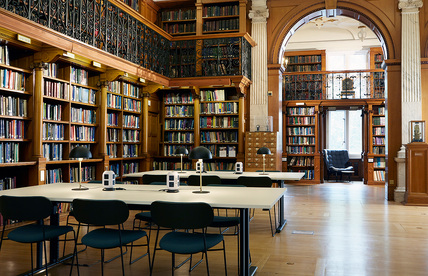
Courtesy of Institution of Mechanical Engineers
Surviving records for routine working vessels that may exist are often unindexed and difficult to locate.
Evidence from the wreck raise questions that focus historical investigation.
Archival research helps recover the working life and social significance of the vessel.
Each new question deepens the understanding of construction, use, and operation.
Vessel and Wreck
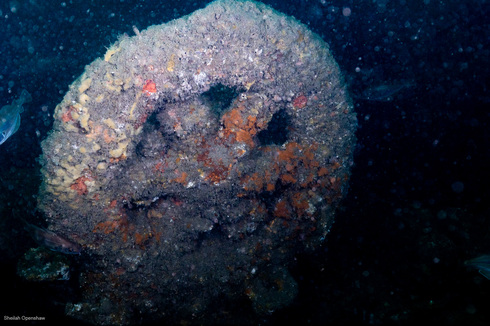
Built in 1866 at Portsmouth Dockyard as Mooring Lighter No. 8.
Unpowered wooden barge fitted with a steam‑driven capstan.
In service for 47 years before sinking in 1903.
Now a Scheduled Monument known as the “Pin Wreck”.
Represents early use of powered machinery in naval support vessels.
Recreating the Vessel
Photogrammetry creates accurate digital models of the wreck.
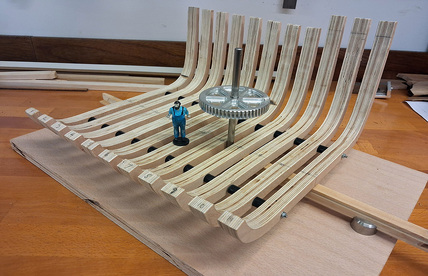
Historic drawings and records inform reconstruction of original components.
Combining archival study with 3D data, modelling, and printing.
An ongoing, amateur‑led research and reconstruction project.
Aims to better understand a forgotten Royal Navy working vessel.